
December 2024 | Joe Goodacre | Flatiron School Capstone

Speculative project integrating sport climbing betting into the sports betting platform BetMGM.
Why Climbing?
Climbing has emerged as a dynamic and rapidly growing sport, gaining significant global recognition over the past decade. Viewership and participation have increased dramatically, culminating in its official debut as an Olympic sport in 2020 and its continued success in the 2024 Olympics. As a professional climber, I have witnessed firsthand the sport’s evolution and the development of a passionate, thriving community of fans.
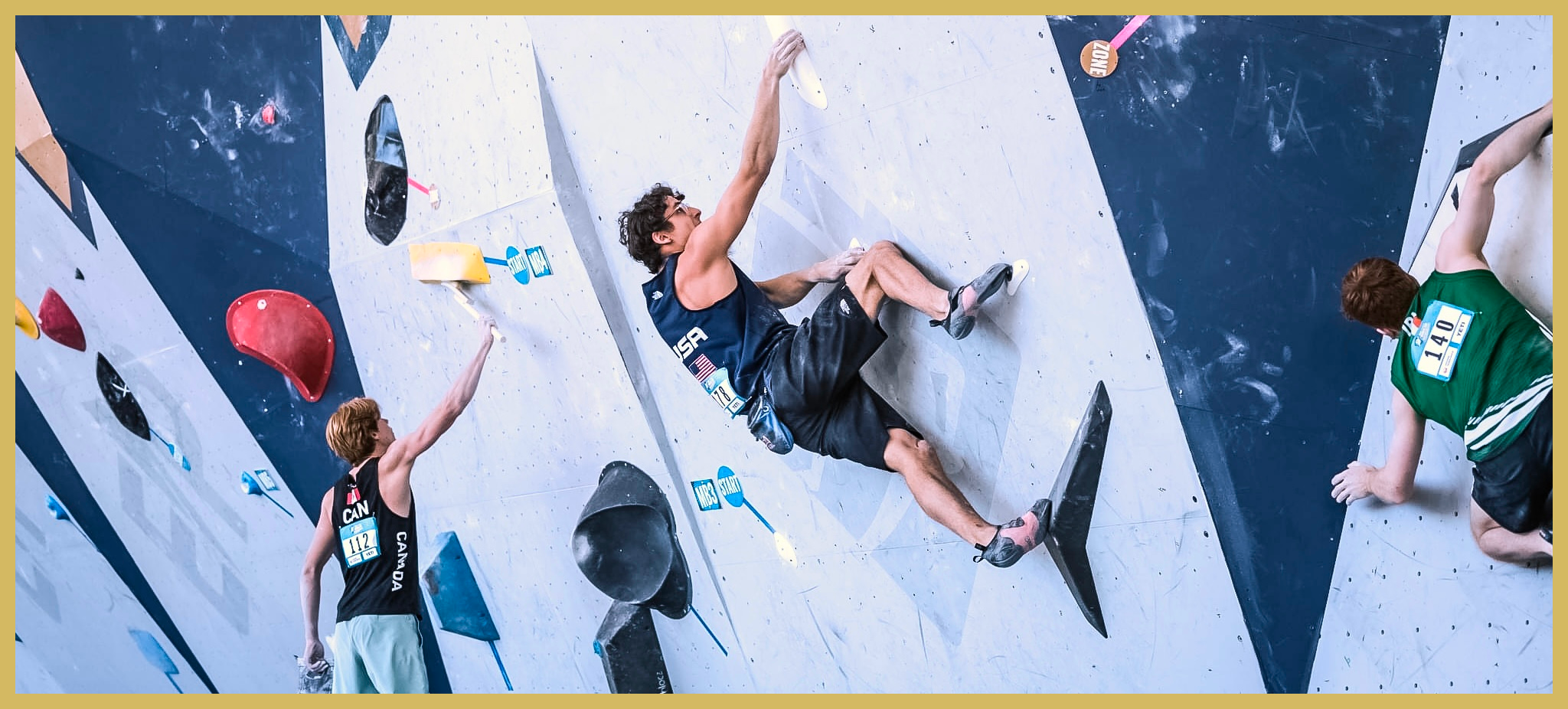
Despite its rising popularity, climbing faces financial challenges that prevent professional athletes from fully dedicating themselves to their craft. Unlike other major sports in the United States, climbing lacks interactive platforms designed to engage a broader audience and generate sustainable revenue streams. Currently, no such experiences exist in the market, leaving a significant gap with no direct competitors. This creates a unique opportunity to pioneer an innovative solution that enhances fan engagement while driving financial support for the sport’s continued growth.
Unlocking New Market Opportunities
If we look at the business benefits of this product, it revolves around the development and growth of climbing as a sport. As a relatively new sport, its growth in the past few years has been astronomical. By creating this product, businesses can generate revenue through betting fees, in-app purchases, and advertising partnerships. Solving this problem not only meets the needs of the target users but also positions the business as a leader in a specialized sports betting market, with the potential for expansion into other niche sports communities.
Problem Statement
Climber enthusiasts and those interested in learning about the sport need a betting platform in order to engage with the IFSC World Cup circuit and connect with the climbing community.
Understanding the User
The target audience for the product includes climbing enthusiasts and individuals interested in exploring the sport. These users are likely to engage with the platform while watching competitions or as a gateway to discovering climbing. By using the product, they can deepen their connection to the sport, enhance their excitement during events, and feel more immersed in the climbing community.
User Stories

As a seasoned bettor, I want to view detailed statistics and analysis so that I can make informed bets.
As a casual climber, I want to place bets on IFSC World Cup events so I can feel more engaged with the competitions.
As a competitive climber, I want to track the performance of top athletes so I can improve my own training and strategies.
As a parent of a competitive climber, I want to follow their progress throughout the season so that I can support them and place relevant bets.
As an avid bettor, I want to place bets on a new sport so I can get away from all the same parleys and odds of mainstream betting sports.
From Sketches to Screens
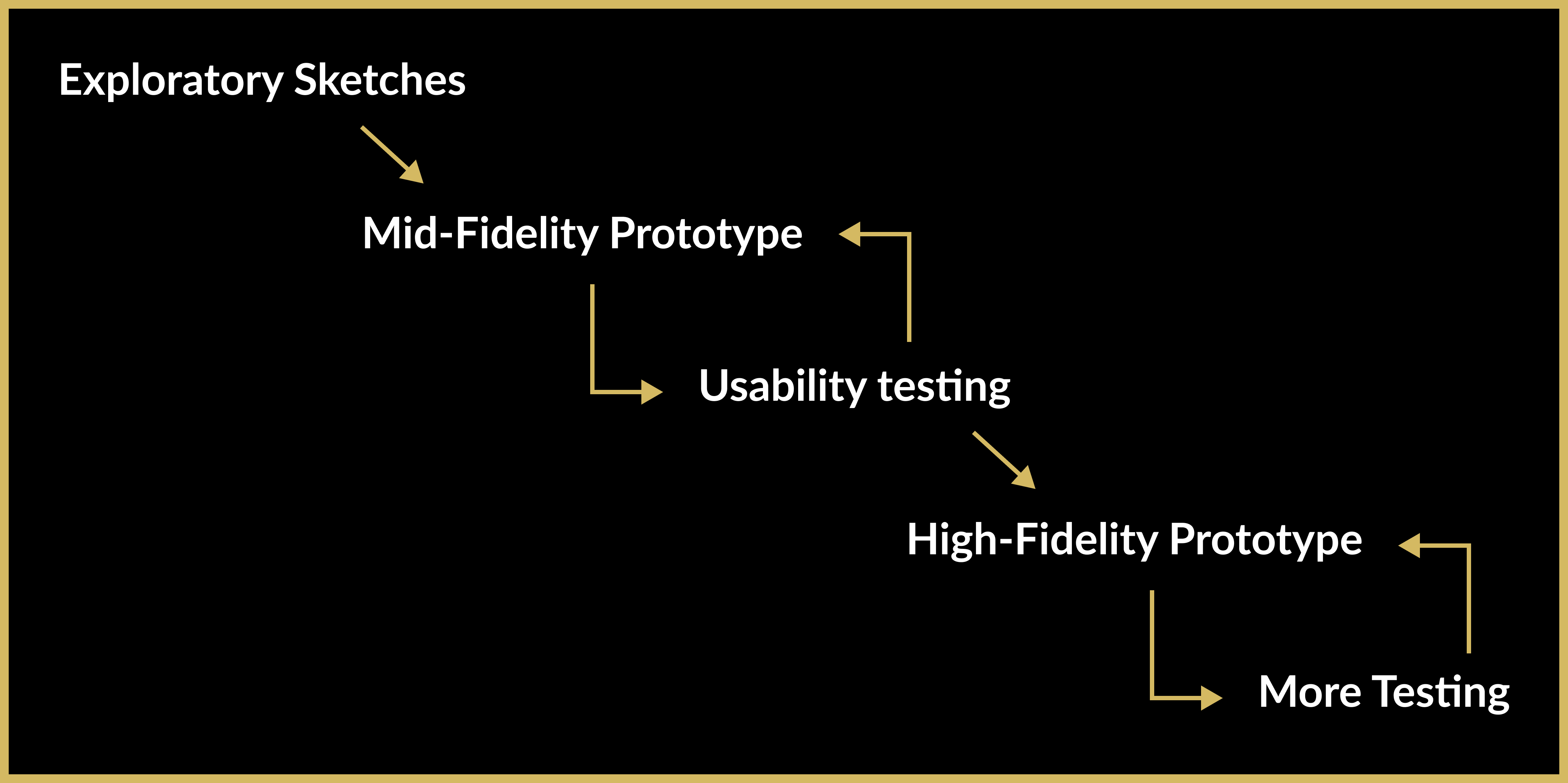
Guided by the user stories, I developed a comprehensive list of potential features for the product and applied the MoSCoW prioritization method to identify the essential features for the minimum viable product (MVP). These key features informed the creation of the most critical screens for prototyping and usability testing.
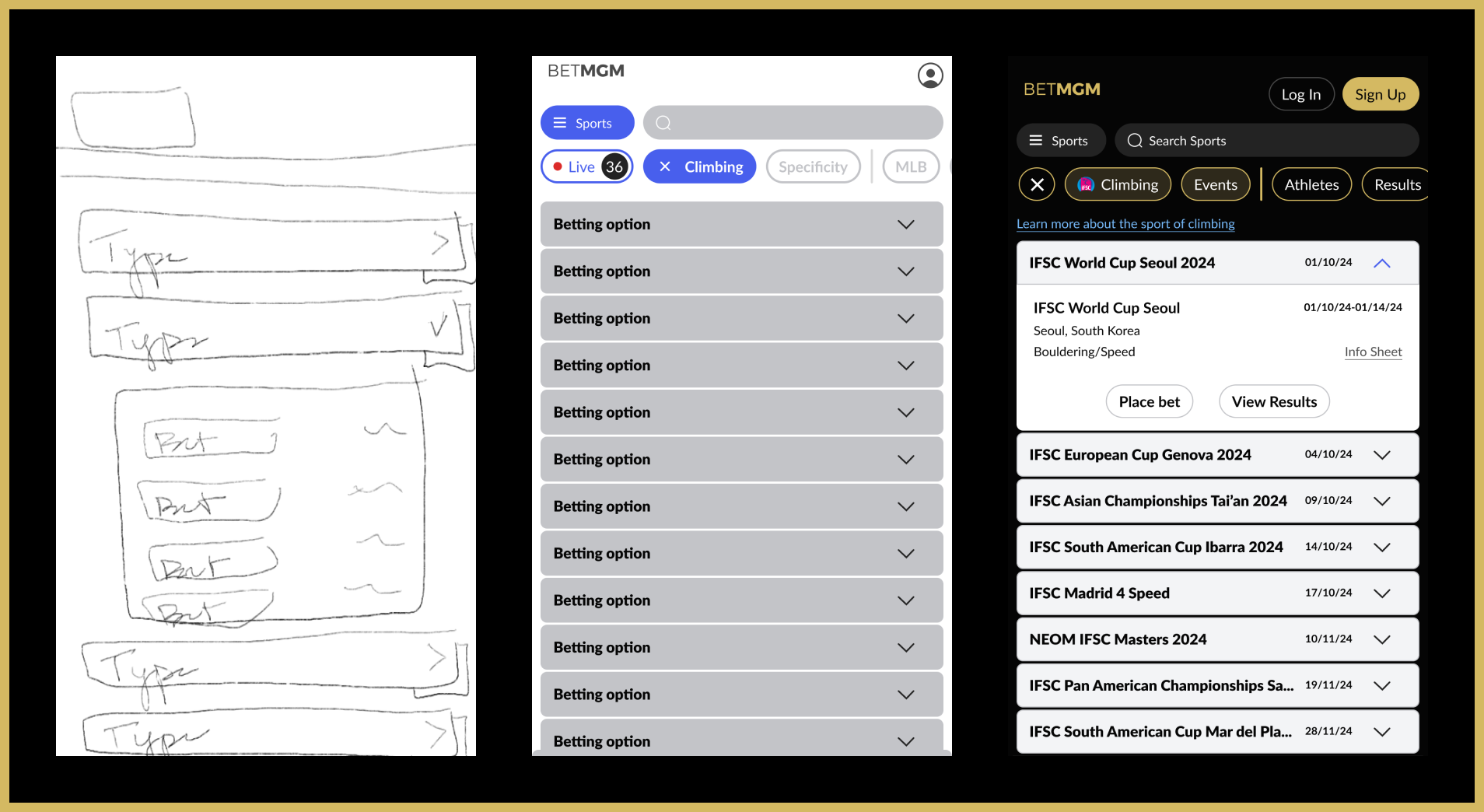
The project management process followed a structured flow, beginning with exploratory sketches of these screens and progressing through mid-fidelity to high-fidelity prototypes. This was supported by rigorous usability testing to ensure a user-centered design.
Usability Test Plan
Tasks
1. Learn about the sport of climbing.
2. Place bets on specific athletes.
3. Place live bets.
Metrics
1. Time to complete task.
2. Success rate.
3. Error paths taken.
Methodology
– Remotely moderated.
– Retrospective probing.
Participants
Any persons aged 20-35 in the United States who make at least 5 bets monthly with minimal climbing knowledge.
Usability Test Analysis
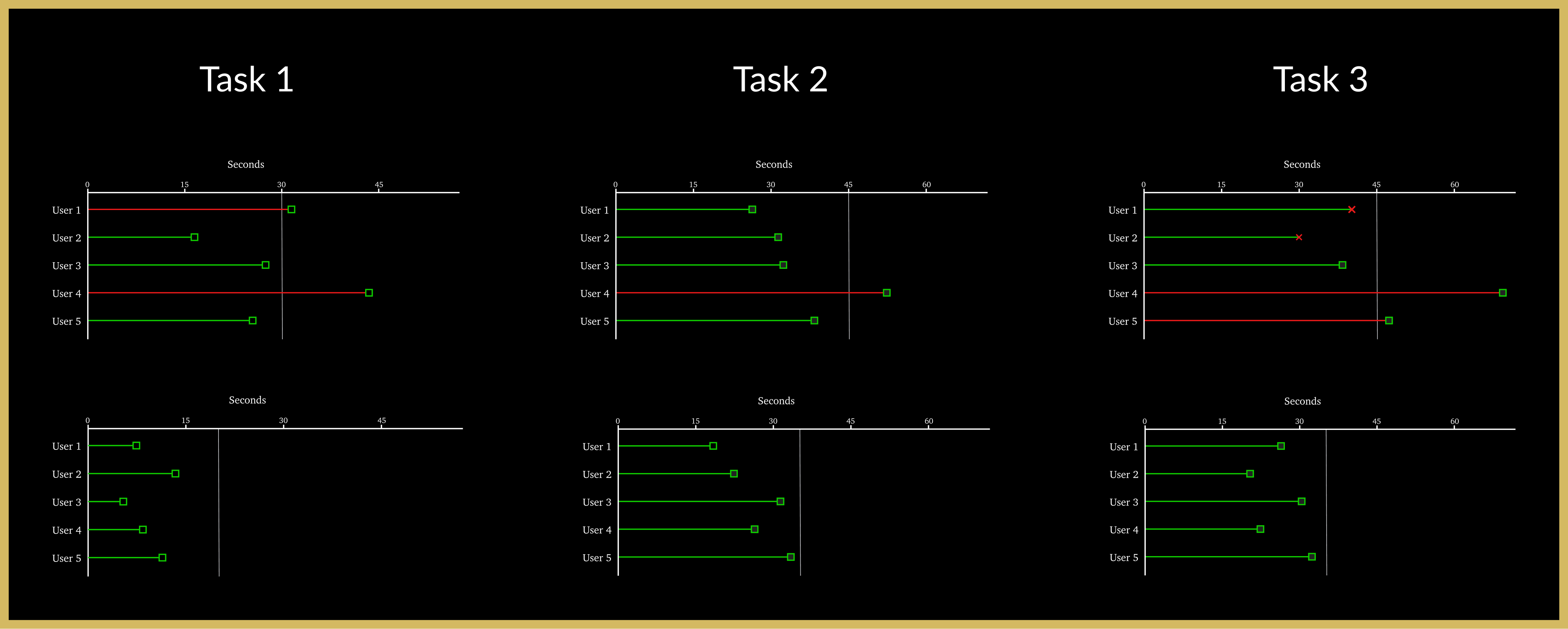
The data visualizations clearly highlight the improvements between the first and second usability tests. The top row of graphs represents the task completion times for five participants during the initial test, while the bottom row shows significant improvements in both time and success rates during the second test. Comparing these metrics, we can see a noticeable increase in performance across all tasks. Notably, Task 3 demonstrated the most substantial improvement, with task completion time reduced by 40% and the pass rate reaching 100%. These results showcase the effectiveness of the design refinements between prototypes.
Design Iteration
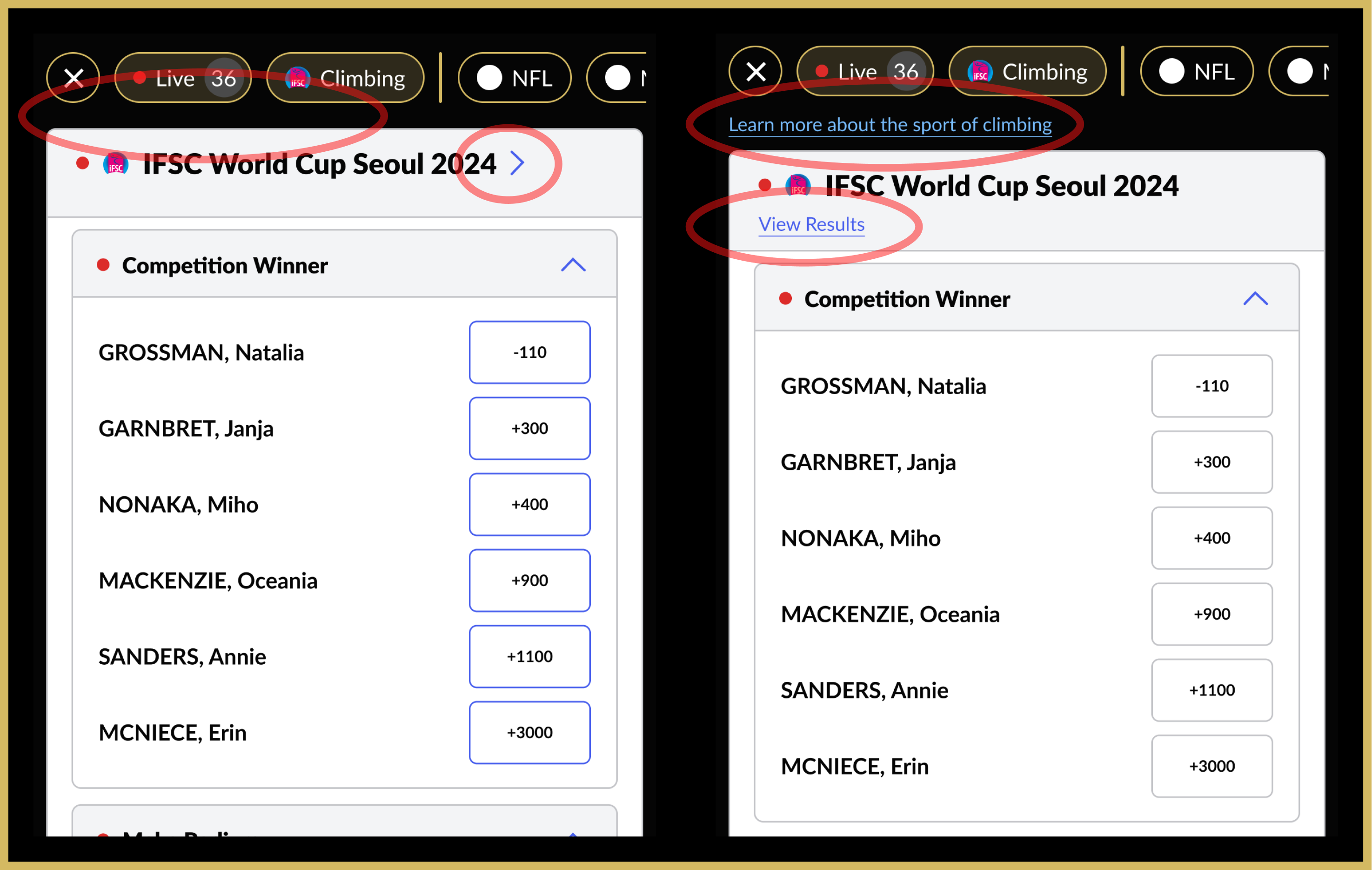
While transitioning from mid to high-fidelity prototypes, I carefully integrated insights from the initial usability test, focusing on areas where users experienced the most confusion. For instance, the navigation to view competition results was adjusted by replacing a simple arrow with a clearly labeled “View Results” button to improve clarity. Additionally, I incorporated a “Learn more about the sport of climbing” link at the top of all climbing-related interfaces, ensuring users have immediate access to relevant information to make more informed betting decisions. These changes addressed key pain points from the first round of usability tests and directly contributed to the significant improvements in task success rates and completion times seen in the data visualization.
Opportunities for Growth and Innovation
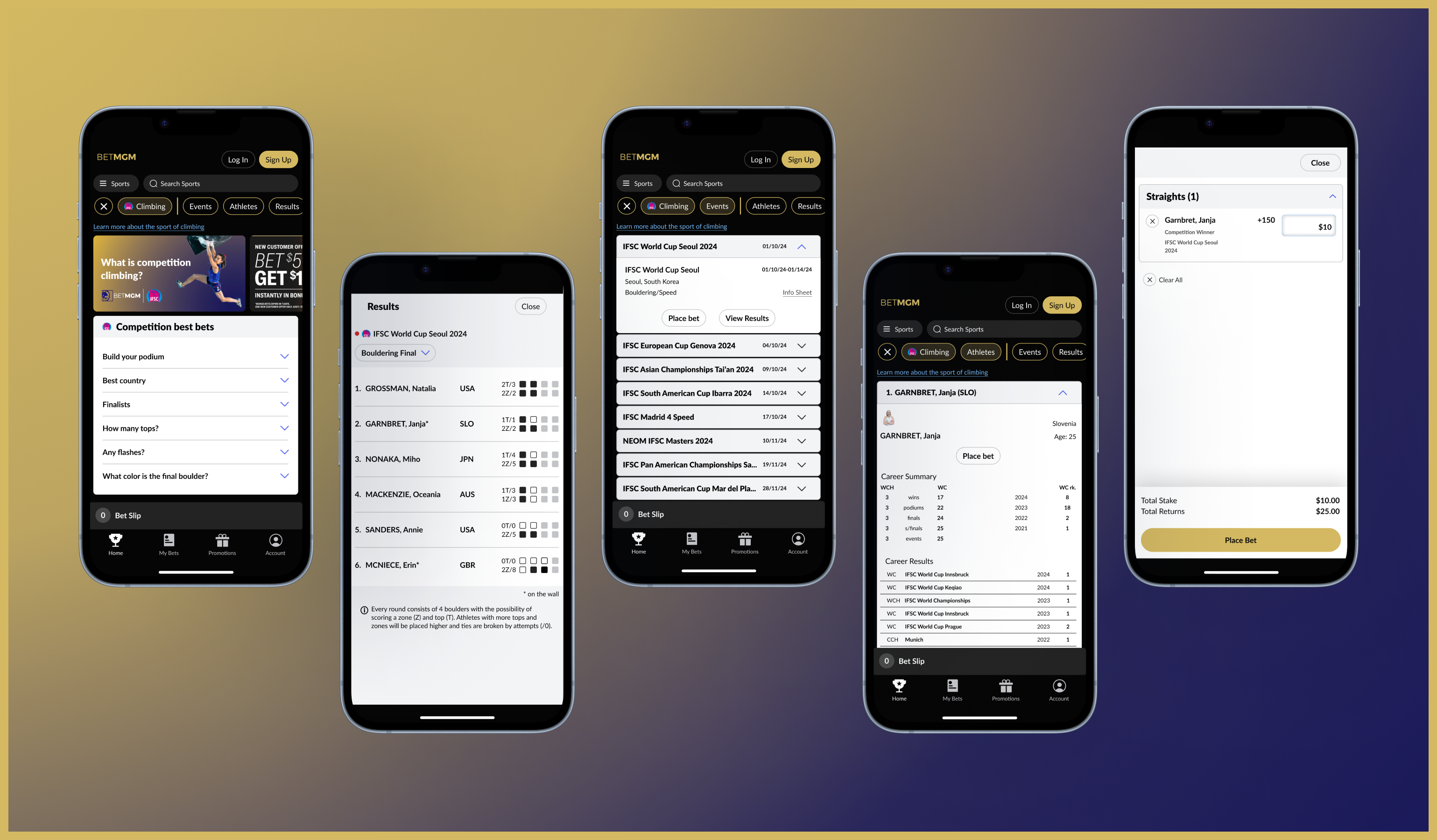
Following the success of the second usability test, the product is ready for release. However, as with any project, there is always room for improvement. While significant progress was made in tasks related to learning about the sport of climbing and placing live bets, there was only modest improvement in the task of betting on specific athletes. Further testing could help refine and streamline this experience. Additionally, given the complexities of competition climbing, there is considerable potential for expanding features and introducing new betting options, such as a fantasy climbing challenge or brackets for speed climbing. The foundation has been established, and there are plenty of opportunities for further enhancement.
Reminder:
This is a speculative product done as a capstone project for Flatiron School Product Design course.
 Joe Goodacre